Funk N. Furter wrote:TomViolenz wrote:
Yes for a part of society, not a system!
So it says nothing about the kind of revolution he would make. Hence my question why you didn't add other non-relevant classifications to describe him
"Petty bourgeois nationalism" describes Castro's
political program. Petty bourgeois means he did not stress the importance of the urban working class, instead choosing a petty-bourgeois route — guerilla warfare in the countryside. The countryside where
peasants live. Peasants are not working class, they are a class of their own. They are closer to the petty-bourgeis even though many are poor and some have no land to farm. Some of the landless might be more like
workers, but most are
sort of petty-bourgeois.
"Petty-bourgeois" also describes Castro's goals. He did not plan to overthrow capitalism completely, and begin a transformation to a socialist society, as I said. He only wanted to get rid of the dictatorship and American domination. These are parts of the
bourgeois revolution.
Even Che Guevara called Castro a "left wing bourgeois". These sort of comments are always used to describe a person or group's methods and program.
Let's see what others have to say...
Anderson also comments in relation to Matthews’s famous interview with Castro:
"Defining the ‘Rebel Army’s’ political slant in almost the terms of an FDR liberal, Matthews wrote: ‘It is a revolutionary movement that calls itself socialistic. It is also nationalistic, which generally in Latin America means anti-Yankee. The programme is vague and couched in generalities, but it amounts to a new deal for Cuba, radical, democratic and therefore anticommunist. The real core of its strength is that it is fighting against the military dictatorship of President Batista…[Castro] has strong ideas of liberty, democracy, social justice, the need to restore the Constitution, to hold elections’." 41
None other than Che Guevara had even written that Castro was a "left-wing bourgeois".31 Guevara’s testimony counts for a little more than Lorimer’s historical idealisations. Franqui comments further on Castro’s chequered ideological journey:
"In July 1958, out in the Sierra, Fidel made some startling statements to Jules Dubois, an American correspondent with State Department connections. Some of the young radicals from Santiago – Nilsa Espín, Rivero, and the president of the student body, Jorge Ibarra, dropped out of the 26 July Movement because of the conservatism of those remarks. In fact, Fidel’s statements were so reactionary they were suspicious. But until the end of the war and the beginning of 1959, no one believed Fidel was a Communist. Now, in 1959, when the agrarian reform had yet to take place and Fidel was more or less incommunicado, Raúl and Che began to take certain matters into their own hands – especially regarding the takeover of plantations by means of Communist peasant leaders. In a public address, Fidel severely criticised those methods, ordered the restitution of the lands, and said that the agrarian reform would be strictly legal. In his visits to the university and to the offices of ‘Bohemia’ and ‘Revolución’, he would say in a loud voice: ‘I believe only in the revolution. I will shoot anyone who opposes the revolution – including Raúl and Che’." 32
I could quote dozens more. You actually agreed with me that Castro was not a socialist before the revolution removed Batista and America shunned the new government. Therefore this conversation should be quick and easy. If Castro wasn't a socialist, what was he? His main aims were land reform, democracy, removing American domination of the economy. His method was guerilla warfare based on the peasantry. How so we label this? Petty-bourgeois nationalism.
Search MIA "petty-bourgeois nationalism"
Search MIA "petty-bourgeis nationalist" 6,190 results
Castroism and the Politics of Petty-Bourgeois Nationalism This is from a website I wouldn't recommend, and I haven't read this, but at least it shows other Marxists use the exact same phrase.
Marxism is about the WORKING CLASS establishing socialism. The peasantry cannot do it. Any politics emphasising the peasantry (Castro, Mao etc) is essentially petty-bourgeois. Any politics limited to bourgeois-democratic reforms and focused on removing foreign domination ONLY is nationalist. Independence struggles are nationalist for example. Obviously revolutions can have a mixture of tasks and aims. In Russia the bourgois revolution had not been completed before the October revolution. Therefore the Bolsheviks had to do it. They had to carry out the 'bourgeois tasks' (tasks classically done by the
bourgeois revolutions in England, France and Holland). These include breaking up the feudal land structure -
land reform, ie affordable land to the poor peasants, removal of foreign domination, parliamentary democracy, modernising the economy. But the Bolsheviks did not limit themselves to these
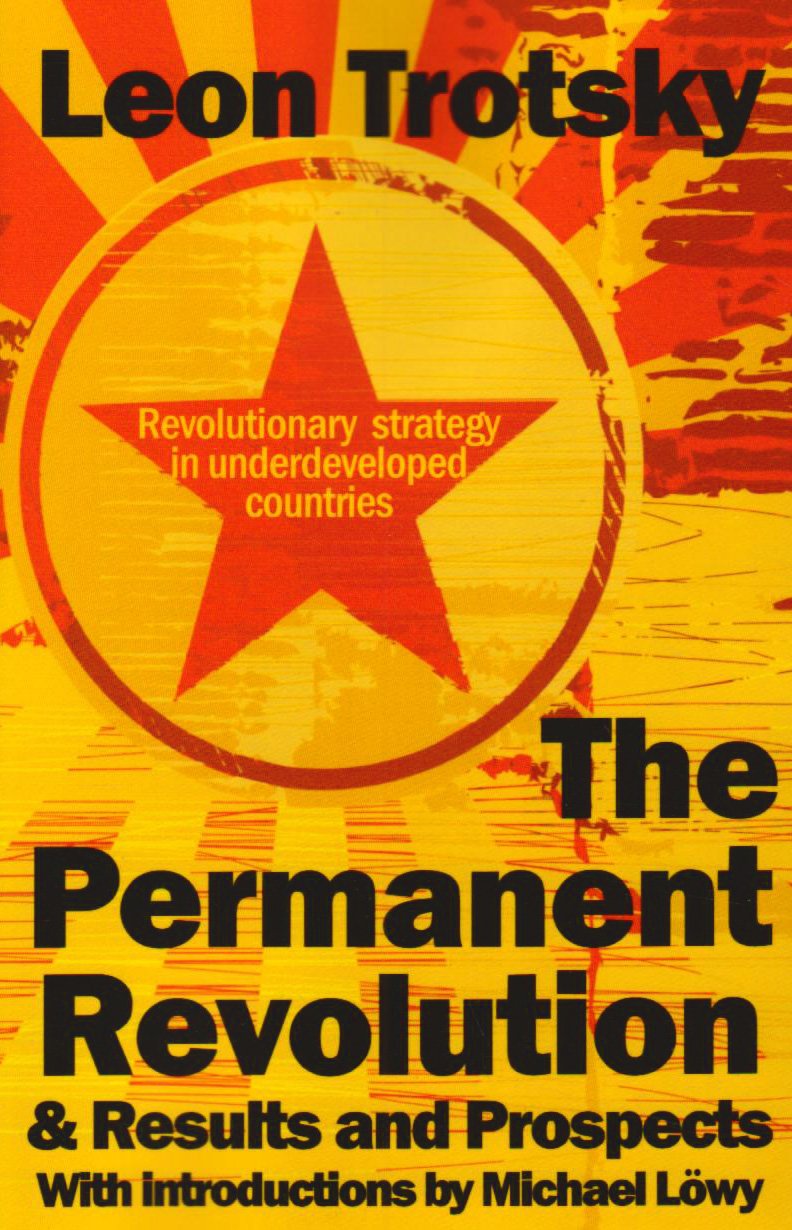
bourgeois tasks, they planned to continue straight through to socialism, a concept developed by Trotsky originally, known now as the theory of Permanent Revolution.
 https://www.marxists.org/glossary/event ... liberation
http://www.socialistworld.net/pubs/Cuba/00.html
http://www.socialistworld.net/pubs/che/00.html
https://www.marxists.org/glossary/event ... liberation
http://www.socialistworld.net/pubs/Cuba/00.html
http://www.socialistworld.net/pubs/che/00.html 


