Princess Buttercup wrote:


Princess Buttercup wrote:
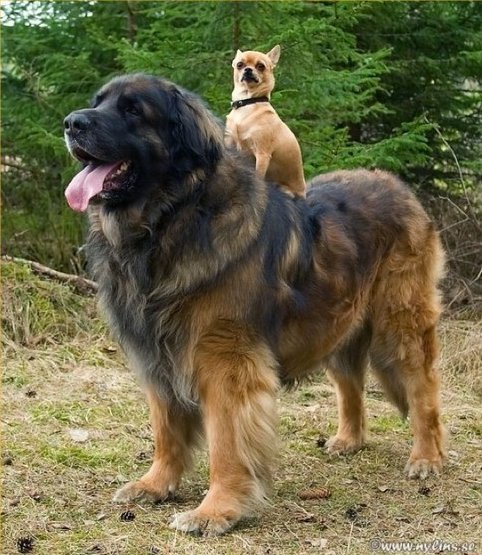
I've done that, it does help a bit.Tarekith wrote:I think from now on when you guys start bickering I'm just going to post puppy pictures. Of big dogs.
I have not used anecdotal evidence to paint a particular group of people as having certain characteristics, I have used it to refute that claim.TomViolenz wrote: Ehm, your evidence was nothing but an anecdote either
So faulty logic, right back at you
Which suggests that stereotyping based on empirical evidence sampled from a larger set could in fact be fine. Now, it should be clear that induction is never a foolproof method of inference, however I do appreciate Machinesworking's attempt to establish a socially acceptable form of stereotyping as a placeholder until we inevitably evolve omniscience, regardless of how controversial as his approach, or even intent may be.Machinesworking wrote:I have not used anecdotal evidence to paint a particular group of people as having certain characteristics, I have used it to refute that claim.
Fighting fire with fire if you will.
The onus is on you to prove that dog owners are of a certain type of person, and you have failed to do that. The basic point remains, stereotyping based on things like anecdotal evidence is shitty logic, it's using generalizations to come to conclusions that you truly don't have all the evidence for.
Princess Buttercup wrote:Which suggests that stereotyping based on empirical evidence sampled from a larger set could in fact be fine. Now, it should be clear that induction is never a foolproof method of inference, however I do appreciate Machinesworking's attempt to establish a socially acceptable form of stereotyping as a placeholder until we inevitably evolve omniscience, regardless of how controversial as his approach, or even intent may be.Machinesworking wrote:I have not used anecdotal evidence to paint a particular group of people as having certain characteristics, I have used it to refute that claim.
Fighting fire with fire if you will.
The onus is on you to prove that dog owners are of a certain type of person, and you have failed to do that. The basic point remains, stereotyping based on things like anecdotal evidence is shitty logic, it's using generalizations to come to conclusions that you truly don't have all the evidence for.
Machinesworking: Stereotyping for the enlightened

 Bravo!!!!!!
How so?!Princess Buttercup wrote:You seem to misunderstand the nurturist/egalitarian position. Perhaps the schools you attended as a child were underfunded.

Of course any attempt to reduce any mammalian behaviour entirely to nurture or to genes is silly. The evidence seems to indicate that there's a mix, with some abilities, tendencies and patterns (e.g. language) being innate, while others (e.g. the inability / ability to consider differing points of view) arising from learned and habitual patterns.TomViolenz wrote:How so?!Princess Buttercup wrote:You seem to misunderstand the nurturist/egalitarian position. Perhaps the schools you attended as a child were underfunded.
The debate is over how much influence the dogs raising (nurture) has over the influence thru ones genes(nature)
So when re:dream says it's the actual upbringing of the dogs that make them aggressive ankle-biters it's nurter(the raising) that wins.
The shoking thing then is, that someone must think it's a good thing to raise dogs to become aggressive anklebiters, and that this is obviously someone who is responsible for raising all really small dogs in all the places I have ever visited.
Or maybe it's because this kind of behavior is actually something that people who buy small dogs, ask for, so that it became tradition to raise all really small dogs to be mean and loud anklebiters.
Either way schocking
Machinesworking wrote:I have not used anecdotal evidence to paint a particular group of people as having certain characteristics, I have used it to refute that claim.TomViolenz wrote: Ehm, your evidence was nothing but an anecdote either
So faulty logic, right back at you
Fighting fire with fire if you will.
The onus is on you to prove that dog owners are of a certain type of person, and you have failed to do that. The basic point remains, stereotyping based on things like anecdotal evidence is shitty logic, it's using generalizations to come to conclusions that you truly don't have all the evidence for.
That's pretty much how I (now) understand it.TomViolenz wrote: Maybe it's the fact that these people mother the little suckers so much that they start to feel themselves to be the alpha in the pack over the human and are trying to constantly assert their dominance.
That seems to confirm my suspicion. So small dog owners mostly have one trait in common: They are shitty dog-owners (while they can be otherwise great people Machinesworking).re:dream wrote:Of course any attempt to reduce any mammalian behaviour entirely to nurture or to genes is silly. The evidence seems to indicate that there's a mix, with some abilities, tendencies and patterns (e.g. language) being innate, while others (e.g. the inability / ability to consider differing points of view) arising from learned and habitual patterns.TomViolenz wrote:How so?!Princess Buttercup wrote:You seem to misunderstand the nurturist/egalitarian position. Perhaps the schools you attended as a child were underfunded.
The debate is over how much influence the dogs raising (nurture) has over the influence thru ones genes(nature)
So when re:dream says it's the actual upbringing of the dogs that make them aggressive ankle-biters it's nurter(the raising) that wins.
The shoking thing then is, that someone must think it's a good thing to raise dogs to become aggressive anklebiters, and that this is obviously someone who is responsible for raising all really small dogs in all the places I have ever visited.
Or maybe it's because this kind of behavior is actually something that people who buy small dogs, ask for, so that it became tradition to raise all really small dogs to be mean and loud anklebiters.
Either way schocking
In the case of little dogs (which, just for the record, I dislike) two things seem to be clear. The one is that with the exception of some particular behaviour patterns (e.g. hunting, retrieving, etc) most of the abilities, tendencies of different dog breeds are pretty much the same; and by extension small dogs are therefore not that different from big'uns. Which kind of stands to reason, since despite the huge differences, they are still part of the same species (within any scientific definition of the word species). Given the relatively recent nature of breed divergence, it would be very surprising if there were to be any really deep differences.
The other is that they do behave differently, partly because we respond differently to them. Interestingly, and oddly, if I understand the article correctly, we tend to assert our pack dominance over big dogs much more readily, leading them to behave in general more submissively, while (because some of us consider them cute) we don't do this with small dogs, leading to inappropriate levels of aggression.
Very interesting, actually, because this implies that much of the perceived difference is actually shaped by our own unconscious and unreflective behaviour patterns; and then we interpret the results of our behaviour as an inherent characteristic of the dogs.


