Page 2 of 3
Posted: Wed Apr 02, 2008 4:53 pm
by Tarekith
I agree on the layering, usually I use one that provides the meat of the kick, and another with more of the drum beater sound, that click bit that helps it stand out in a mix. I also recommend NOT going crazy with effects like EQ and compression, usually you can get a much better sound just using the volume to balance the kick in the mix.
Posted: Wed Apr 02, 2008 11:21 pm
by eggnchips
Ok thank you all, any more tips would be indeed welcome.
Posted: Thu Apr 03, 2008 12:02 am
by lunabass
eggnchips wrote:Yeah but Like I said, I can get it booming nice on my monitors (Fostex PM0.5 MKII) and outboard soundcard (M audio Ozone interface keyboard) then it disappears on a Hifi sound system/through onboard soundcard or anything else.
even if you're not in the best listening environment, the best way to understand your monitors and room etc is to alway A/B your mixes against commercial music or mixes you really admire. keep a copy of a well mixed track in your session and have a listen to it occasionally and compare it to yours...what are the differences? making your mix sound good on your monitors in your room is not enough, you need to understand how they relate to other systems. your kicks will probablly sound different on your fostex monitors to the commercial mix. you may even think your kicks sound better on your fostex's compared to the commercial track but this is not the point. making your kick sound like theirs on your monitors will give it a much greater chance of sounding good on other systems. once you understand what it takes in your room then you will find over time that you will need to A/B less and less.
even the best audio engineers have a reference cd they use when mixing in a new room etc. it helps then to understand how the room and monitors actually sound so they can adjust their mixes accordingly.
Posted: Thu Apr 03, 2008 12:10 am
by dcease
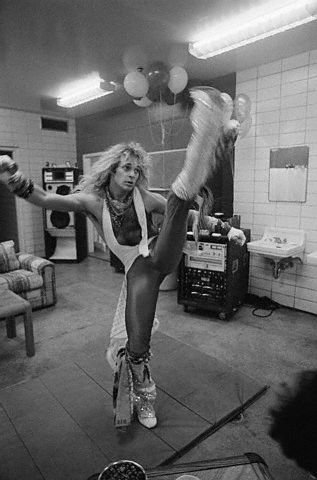
dude got kicks mastered...
Posted: Thu Apr 03, 2008 12:17 am
by lunabass
dcease wrote:
dude got kicks mastered...
meh. might as well jump
Posted: Thu Apr 03, 2008 8:41 am
by sinnatagg
laird wrote:
Good advice!
related to this:
Are you putting compression/limiting on your master bus?
#1 way to make a good kick sound like a wet fart, imo.
Agreed, if your drums sound washy and lacks transients (or doesn't "kick" to put it in producer parlance) you should listen to it without any dynamics processing. Ofte some distortion will make your drums sound way sharper and loader than compressing them (but that may just be my style).
Layering two sounds that complement each other with each contributing either the top or the bottom usually makes for "fatter" kicks. You should make your kicks complement and work with your base line since the base can add a lot of energy to your kick if done right (and make one washy trainwreck note if not).
-s
Posted: Thu Apr 03, 2008 8:53 am
by thefool
isn't it just a matter of configuring the master bus compression and limiting correctly, especially with attack and release times
Its just a matter of using it subtly enough too..
Posted: Thu Apr 03, 2008 9:30 am
by sinnatagg
thefool wrote:isn't it just a matter of configuring the master bus compression and limiting correctly, especially with attack and release times
Its just a matter of using it subtly enough too..
But then you lose that pumping sound.
I think using compression as a soundshaping tool is what is being pointed to here and that really ain't very subtle. So, using a tool to reduce dynamics will cost you the dynamics of your drums. If you back off the effect, then not so much.
What I'm talking about is slapping the compressor over your drums, setting the treshold to -12 or below and the ratio to 4:1 or so and then grooving along until the moment when all you hear is that svish-swosh from hats or cowbell or whatever. Even if it is subtle it'll steal vital dynamics from your track and turn track from a raving dance monster to mediocre french house bob your head track.
To hear this drag out a "free electro-123" clip from the library which contains a compressor and an impulse and experiment with the compressor. Turn the treshold down a bit or the ratio up to 4:1 fex. to add some pumping and hear the hats go totally flat. Turn up the attack or turn it all off to remove the effect. Personally a think this clip sound way better without the compression, but not as loud of course, and you need to mix better to make it work without the compressor.
Back to the kick, if you drag this over to tracks, one for the kick and the other for the rest, you can form only the kick without destroying the higher frequency percussion. But then you lose the pumping and the interplay between the hits.
-a
Posted: Thu Apr 03, 2008 9:54 am
by thefool
Oh i was responding to:
Are you putting compression/limiting on your master bus?
#1 way to make a good kick sound like a wet fart, imo.

You are right at being carefull on the drums though. I heard that the percussion was one example where loudness wasn't always perceived around the average sound but at the differences when a hihat hits louder than the other etc.
Posted: Thu Apr 03, 2008 10:40 am
by eggnchips
It would be nice to hear somebody elses set on my system. Any offers?
Posted: Thu Apr 03, 2008 3:19 pm
by ChiDJ
eggnchips wrote:It would be nice to hear somebody elses set on my system. Any offers?
eggn'
Your goal is to get your mixes to sound like commercial mixes right??
You don't need someone else's ableton file to do that. Listen to commercial releases on your system and get your mix to sound like them ON YOUR SYSTEM.
It really is that simple.
Posted: Thu Apr 03, 2008 4:46 pm
by Mr Man
Also good sometimes to use variations of the same sound... like velocity, slight pitching, adsr - whatever just experiment instead of the same kick 4/4 sample all throughout.
also layering real drum kits with synthetic. I like to do it the other way round though - real kit then layer synthetic... microtonics great for this!
Posted: Thu Apr 03, 2008 5:25 pm
by Moody
Use Spectrum, solo your kick sound/s and see what it/they is/are doing. Then start to bring in your other sounds and see what they are doing in comparison. This will show you if it is to low in the mix or if another sound like a bass or pad is clashing with the frquencies. This will also show you why sometimes less is more in a mix. From there you can tweak the tune, sustain, decay to shape it with the mix so it will stand out and decide if a little side chain compression would help but, most likely you need to give this some time and in the end don't mix your drums by themselves.
Posted: Thu Apr 03, 2008 5:27 pm
by Moody
Mr Man wrote:Also good sometimes to use variations of the same sound... like velocity, slight pitching, adsr - whatever just experiment instead of the same kick 4/4 sample all throughout.
also layering real drum kits with synthetic. I like to do it the other way round though - real kit then layer synthetic... microtonics great for this!
Great advice as well. Unless you want some robot sounding kick some mild variations to the kick really help give its own presence.
Posted: Thu Apr 03, 2008 5:41 pm
by laird
thefool wrote:isn't it just a matter of configuring the master bus compression and limiting correctly, especially with attack and release times
Its just a matter of using it subtly enough too..
perhaps you think i was trying to say "compressors always destroy drums"?
to paraphrase my gross generalization, I said "to solve the case of The Dead Kick Drum, your first suspect should be the Mastering Compressor".