that's what I get for checking this thread again. I want my innocence back.sporkles wrote:Wow. I learn, every day.TAINTLICK wrote: BLUMPKIN
What does a stone sound like?
Re: What does a stone sound like?
Re: What does a stone sound like?
i want heritage back.
myrnova stole it. he forced all of us in the U.S. to be Angloamerican. some of us are really pissed since the race card won't work anymore, now that we're all white.
myrnova stole it. he forced all of us in the U.S. to be Angloamerican. some of us are really pissed since the race card won't work anymore, now that we're all white.
Re: What does a stone sound like?
Forge. wrote:that's what I get for checking this thread again. I want my innocence back.sporkles wrote:Wow. I learn, every day.TAINTLICK wrote: BLUMPKIN


Re: What does a stone sound like?
H20nly wrote:i want heritage back.
myrnova stole it. he forced all of us in the U.S. to be Angloamerican. some of us are really pissed since the race card won't work anymore, now that we're all white.
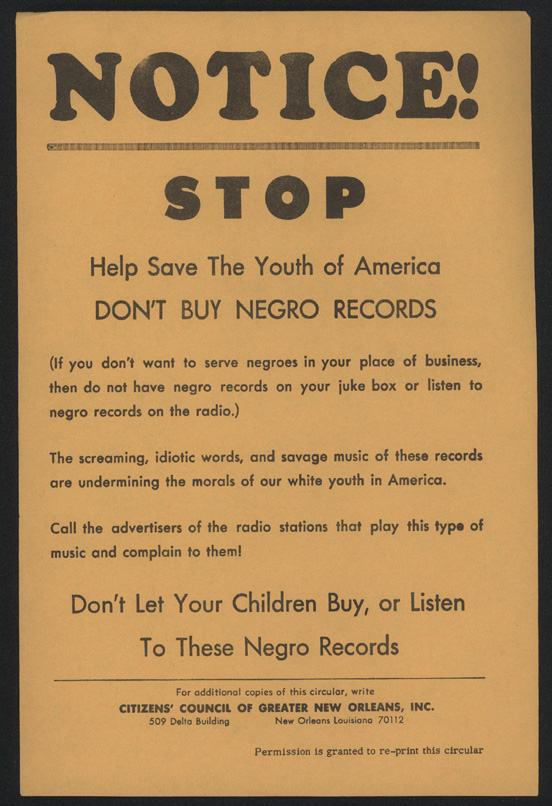

Re: What does a stone sound like?
1. To say that music "is" sounds or "is" code (discernible and communicable pattern) is too simplistic. Both are equally necessary, just like length and breadth are both necessary for area. Neither is pre-eminent. I consider that this renders pointless any further discussion along those lines. Yours is an idea that has no value, or even possibly negative value.myrnova wrote:Wrong.The Finn wrote:myrnova, just one point.
This whole thread started when stringtapper, over in another thread, wanted to talk about a set of musical ideas that come from Germany and France. You derailed that thread, and when people disagreed with you, you said that stringtapper's ideas were American. Which they demonstrably were not.
Each to his own. De gustibo...
(1) As already explained, the whole thread started years ago with 9V topic "music vs audio" in which I claimed music is not sound. Then I doscovered americans consider "music" everything which has a sound. In Europe, on the contrary, music is a (silent) code and the sound is a consequence of music (not the cause)
(2) I derailed nothing, since stringtapper asked "is the conception of note still important nowadays? Discuss" (in a thread called "on music"). Everyone can see who were the trolls and why they enterd the thread.
(3) It's "de gustibus" (not "de gustibo")

4. I also see some simplistic conceptions of nationalities in this thread. The English word for these are prejudices. People who express prejudices can often appear ignorant and boorish.
Re: What does a stone sound like?
It's not that difficult, in my opinion. Maybe I cannot express the concept in the right english terms, because when I use the word "code" I mean "universal essence" (not in a mystic perspective, but "ontologic", like e.g. mathematic, language etc.). Music can be thought (because music is not in the sounds, but in the relations, e.g. intervals). For instance, when you think of a melody, you don't remember the sounds, you just repeat intervals. Sound is not needed. It is just a "mean of transport" for music, not its cause. The same for rhythm.Davo wrote:1. To say that music "is" sounds or "is" code (discernible and communicable pattern) is too simplistic. Both are equally necessary, just like length and breadth are both necessary for area. Neither is pre-eminent. I consider that this renders pointless any further discussion along those lines. Yours is an idea that has no value, or even possibly negative value.myrnova wrote:Wrong.The Finn wrote:myrnova, just one point.
This whole thread started when stringtapper, over in another thread, wanted to talk about a set of musical ideas that come from Germany and France. You derailed that thread, and when people disagreed with you, you said that stringtapper's ideas were American. Which they demonstrably were not.
Each to his own. De gustibo...
(1) As already explained, the whole thread started years ago with 9V topic "music vs audio" in which I claimed music is not sound. Then I doscovered americans consider "music" everything which has a sound. In Europe, on the contrary, music is a (silent) code and the sound is a consequence of music (not the cause)
(2) I derailed nothing, since stringtapper asked "is the conception of note still important nowadays? Discuss" (in a thread called "on music"). Everyone can see who were the trolls and why they enterd the thread.
(3) It's "de gustibus" (not "de gustibo")
4. I also see some simplistic conceptions of nationalities in this thread. The English word for these are prejudices. People who express prejudices can often appear ignorant and boorish.
For the rest, I agree with you regarding H20nly derailing the thread with his racist posts towards italians and african americans.
Re: What does a stone sound like?
I tried to tell my half Filipino half Korean 11 month old daughter who was born in America that she's a warmongering Anglo and she just doesn't get it. Nor will she stop dancing to my techno. Lost cause?
Re: What does a stone sound like?
No its not difficult, it is easy to look at it that way, but easy doesn't mean useful. When I imagine music I hear it in my mind. People in glass houses.myrnova wrote: It's not that difficult, in my opinion. Maybe I cannot express the concept in the right english terms, because when I use the word "code" I mean "universal essence" (not in a mystic perspective, but "ontologic", like e.g. mathematic, language etc.). Music can be thought (because music is not in the sounds, but in the relations, e.g. intervals). For instance, when you think of a melody, you don't remember the sounds, you just repeat intervals. Sound is not needed. It is just a "mean of transport" for music, not its cause. The same for rhythm.
For the rest, I agree with you regarding H20nly derailing the thread with his racist posts towards italians and african americans.
-
regretfullySaid
- Posts: 8913
- Joined: Thu Apr 22, 2010 5:50 pm
Re: What does a stone sound like?
Never! All you gotta do is watch a bunch of superhero movies with her (Superman, Captain America, Batman, etc) and she'll be racist in no time!I tried to tell my half Filipino half Korean 11 month old daughter who was born in America that she's a warmongering Anglo and she just doesn't get it. Nor will she stop dancing to my techno. Lost cause?
The younger the better!
Also, if she ever says she wants to listen to music, tell her it isn't music but sound.


Re: What does a stone sound like?
I don't think this interpretative model ("universal code", "essence", whatever you want to call it) has to be "useful". It just explains the essence of music, which is a form of expression, like language. Now, as for music, you can claim that even language has no code, because it is "the sound you hear". Actually, language is the code you own (not its sound). Infact deaf people ("no sound heard") and mute people ("no sound made") can use it. The same is for music.Davo wrote:No its not difficult, it is easy to look at it that way, but easy doesn't mean useful. When I imagine music I hear it in my mind. People in glass houses.myrnova wrote: It's not that difficult, in my opinion. Maybe I cannot express the concept in the right english terms, because when I use the word "code" I mean "universal essence" (not in a mystic perspective, but "ontologic", like e.g. mathematic, language etc.). Music can be thought (because music is not in the sounds, but in the relations, e.g. intervals). For instance, when you think of a melody, you don't remember the sounds, you just repeat intervals. Sound is not needed. It is just a "mean of transport" for music, not its cause. The same for rhythm.
For the rest, I agree with you regarding H20nly derailing the thread with his racist posts towards italians and african americans.
Examples:
(1) MUSIC CODE: deaf people can feel the music and can distinguish it from noise and not musical sounds. Because of its universal CODE.
(2) LANGUAGE CODE: everyone can recognize the "code" of human language, even of unkwnown tongues. For instance, I don't speak chinese or arab, swedish, russian... but when I hear its "sound" I understand it is a language and I can distinguish it from anything else (cries, noises, groans etc.), even if I obviously don't understand the words. Because of its universal CODE.
The proof:
Children don't have to "learn" language and music. They just "own" them.
SO: you claim "when I imagine music I hear it in my mind". This is very poetic, but actually impossible (unless you have hallucinations or assumed drugs, in case of brain disease, hypnosis, dreams etc.). What you "hear" is the "memory" of real sounds (your experience in reality), not sounds. The rest is in your fantasy or suggestion. What your brain elaborates in music are the intervals (mathematic relations). The same for rhythm (you don't "hear the drums" in your brain, you just follow the time pattern). Of course in case you play an instrument and/or can read notes, your visual memory will elaborate this experience (you can imagine yourself while playing/reading that music). But this has nothing to do with "hearing the sound" in your mind.
The same for human language: what your brain elaborates are categories and concepts, not "language sounds" (infact deaf people can think).
P.S. Unfortunatelly, for me it is very difficult to express these concepts in proper english, because I don't speak english (I just use its code/rules... google translator works almost in the same way... at least in its aim: following the "universal code" of the different tongues). The saddest thing is that english mothertongue people here seem to be more interested in posting jokes and trolling, rather than trying to discuss this matter in a proper and plain english.
Re: What does a stone sound like?
well okay, if you say so... I mean, I know you speak for 80-90% of the world... at least 99.9% of the rest of the world. If this is your advice... maybe we should consider the validity of your opinion...myrnova wrote:
-
Machinesworking
- Posts: 11551
- Joined: Wed Jun 23, 2004 9:30 pm
- Location: Seattle
Re: What does a stone sound like?
I'll call it.myrnova wrote:The fact americans don't understand my statements is due to two factors:
(
First of all it's not just americans, most other users who've bothered to respond to you haven't understood you because you don't string rational thoughts together period.
Your definition of music is so far out there as to not make any sense at all. Is a snare not an instrument because it's mostly white noise? How about a shaker? there's not even a semblance of a note there, and according to your definition of music if it's not a note it can't be music. If you sneak in percussion because it's an exemption then it's also possible to sneak in all folly sounds as percussion, the same rules would easily apply. So any noise can be music, and I would agree with you.
Now we all know that the real truth here is that you have a "personal" take on music, and you're attempting to designate it as the TRUTH, with a limited understanding of english, and a xenophobic anti american rant or two in the mix for fun. Basically people are laughing at you because you're a fanatic, and that my friend is laughable.
Re: What does a stone sound like?
Since when snares and shakers are considered "musical" instruments?!Machinesworking wrote:Your definition of music is so far out there as to not make any sense at all. Is a snare not an instrument because it's mostly white noise? How about a shaker? there's not even a semblance of a note there, and according to your definition of music if it's not a note it can't be music.

You mean in the U.S.A. even this is considered "music"?

UPDATEMachinesworking wrote: First of all it's not just americans [...] Now we all know that the real truth here is that you have a "personal" take on music, and you're attempting to designate it as the TRUTH, with a limited understanding of english, and a xenophobic anti american rant or two in the mix for fun. Basically people are laughing at you because you're a fanatic, and that my friend is laughable.
angloamericans 16
moderator: USA
H20nly: USA
docprosper: USA
stringtapper: USA
shadx312: USA
scott nathaniel: USA
Seriously: USA
Machineworking: USA
Taintlick: USA
Hanil Yoo: USA
lowshelf: UK
cmcpress: UK
crofter: UK
the finn: South Africa
Davo: New Zealand
Forge: Australia
myrnova: Italy
bagatell: Spain
TOTAL: 16 angloamericans out of 18 users
... in a situation like this (social conformism + heavy nationalism + similar cultural background + same mother tongue: 98%), guess who becomes "the enemy" (different culture + different point of view + different cultural background + language barrier: 2%)
CONCLUSION:

Last edited by myrnova on Thu Oct 24, 2013 1:35 pm, edited 1 time in total.
-
docprosper
- Posts: 1193
- Joined: Sat Apr 24, 2010 11:20 am
- Location: Fredericksburg, VA
Re: What does a stone sound like?
16/18 -> ~89% but don't let math get in the way of your arguement.myrnova wrote: UPDATE
angloamericans 16
moderator: USA
H20nly: USA
docprosper: USA
strongtapper: USA
shadx312: USA
scott nathaniel: USA
Seriously: USA
Machineworking: USA
Taintlick: USA
Hanil Yoo: USA
lowshelf: UK
cmcpress: UK
crofter: UK
the finn: South Africa
Davo: New Zealand
Forge: Australia
myrnova: Italy
bagatell: Spain
TOTAL: 16 angloamericans out of 18 users
... in a situation like this (social conformism + heavy nationalism + similar cultural background + same mother tongue: 98%), guess who becomes "the enemy" (different culture + different point of view + different cultural background + language barrier: 2%)
Ableton Live Suite | M4L | Powerbook | Launchpad | APC40 | Faderfox | 2x1200 | Xone:96 | ...Funk N. Furter wrote:Post properly.
---> http://soundcloud.com/kilcraft