subnoize wrote: ↑Sun Sep 10, 2023 4:48 pm
I understand this is all voodoo to you. It's not something to be ashamed of. I spent 35 years getting here. I don't expect you to learn this overnight.
It is not all voodoo to me. The exact extent of my knowledge varies depending on exactly what area of detail we are getting into.
ARM is ARM, has zero to do with Apple. Apple's customization of lanes and cores, etc has NOTHING to do with the instruction set in the ARM chips.
Let us get a few points out of the way; Intel has an instruction set which is widely known and understood. It is a CISC based chip. ARM is a widely understood instruction set and is RISC based. Implementation of OS would touch supporting chipsets but the application would NOT.
That misses my point and was not my claim. My claim was only about the tools that Apple made available that happened to make porting of Apple API etc specific parts of the code of the mac version of Ableton Live and every other application fairly trivial for developers when it came to them being able to offer versions of their apps that ran natively on Apple arm-based systems. I know thats not the whole story of porting though.
For example I am pretty familiar with the Apple porting guide (
https://developer.apple.com/documentati ... le-silicon ) and some of the things it lists as issues to consider are the sort of things I was hinting at. Since I dont have access to Abletons code, I cannot claim to know how many of these issues they had to deal with or how much engineering effort was required on their part in order to deliver ARM support for the Apple platform version of Live. Clearly some aspects of work that may need to have been done should be reuseable when it comes to offering Live for ARM support on other operating systems in future (eg if there was any x86/x86-64 specific code of certain types), but I still cannot make assumptions in areas such as 3rd party libraries used on other operating systems, which is one of the reasons I keep referring to those.
The Push 3 is based around a USB 3 hub and the connection between the Push 3 and the SBC is in fact USB just like if you were using an external computer.
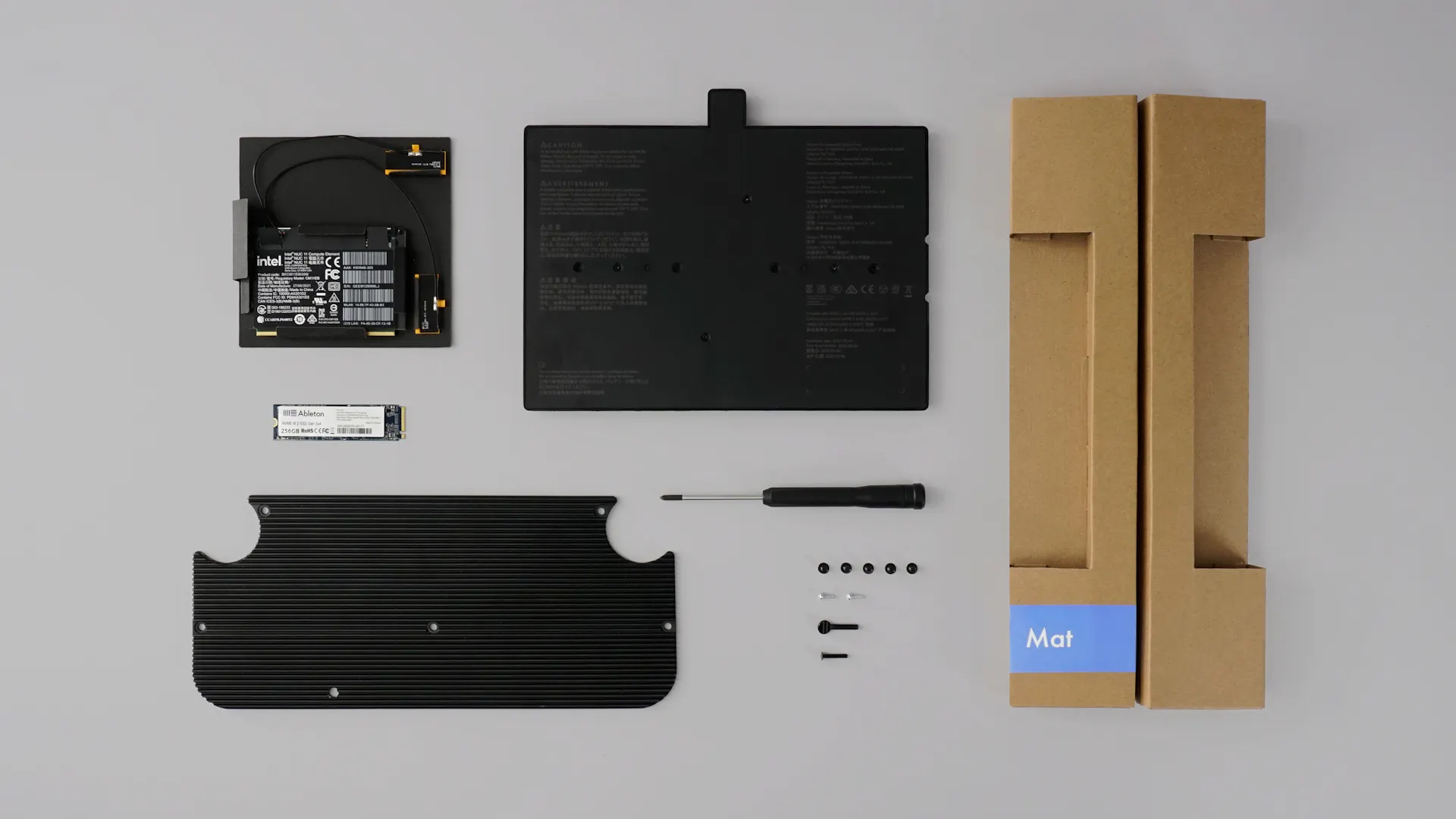
Well sort of, I suppose it depends quite how much of the internals you consider to be the SBC. Many aspects of the hardware connect to the internal computer side using USB, which is indeed quite predictable and manageable, these are indeed peripheral aspects. However Im not convinced that its fair to consider that the Compute Element module that is user-replaceable really counts as being the entire SBC. Its a big chunk of it but to offer one obvious example the storage is separate, its not on the same single board/module, there is at minimum another board which handles these other buses which are used to connect to storage etc. USB is not the only bus that connects the Compute Element module to these other parts, only to the more peripheral hardware. There are probably other examples that I would not speak with authority on, but the details about every pin on the compute element module offers strong clues about what some of those are. If you want to consider that all of those parts together count as the SBC then fine, but actually we dont get to replace all of those via a future user upgrade of the Compute Element module alone, so the 'single' part of the term SBC becomes inappropriate, and thats where plenty of my future uncertainty comes from.
At the end of the day it doesnt matter what you think my knowledge level is, or how many years your career spans. All that actually matters is whether anybody will actually in future deliver a module that can be used as a drop-in replacement for the Compute Element initially used in the Push 3, and whether its available on commercial terms that are acceptable to Ableton. There is a difference between 'could in theory' and actually will, there are a range of theoretical technical and commercial factors that will impact on whether this actually needs to happen, when that would be, and whether it will actually happen for the Push 3 in particular. And theres more than one theoretical option. Maybe other existing later generations of Intel-based modules already work or will be made to work (some degree of certainty that the next generation or two after the 11th gen will, at least at the superficial level using publicly available Intel documentation). Maybe future ASUS generations of Compute Element modules will be entirely compatible, maybe they will start to diverge. Maybe there will be ARM options, maybe there wont. And there are potential workarounds depending on Abletons priorities and commitment levels when the time comes. For example even if there were some tedious show-stopping issues with compatibility of the carrier-board side of the hardware design, they could choose to rework that aspect of the Push 3, although whether they would then offer replacement parts for existing users, as opposed to something they could just use to create a revision so they can continue making new units would remain to be seen. They certainly shouldnt need to go right back to square one on the drawing board when it comes to the more peripheral (USB) aspects of the Push 3 hardware, but thats not the whole story, and is not the area of the hardware that has driven this thread.
If I sit around pondering the future of the Push 3 then what matters far more than all of this is that it a commercial success on an ongoing basis. Because then it would be much more likely that they could justify the effort required to workaround any issues that might arise. I am quite comfortable with the uncertainties of the future, with the myriad variables beyond my knowledge or ability to predict. I am a happy Push 3 user who hopes it has a great future ahead of it, and who has no predictions to offer in that regard. And I would not have expected Ableton to feel the need to offer highly detailed reassurances about the issues raised in this thread, not unless they determined that speculation was eroding consumer confidence in the product to the extent that its commercial viability was being notably affected.

 , I'm going to 'chip' in again.